BEYOND THE SEMESTER: OA and College
OA Alumni are uniquely prepared for college and beyond. Read on to find out why, explore our college outcomes, and read application writing samples from recent alumni.
How does OA prepare students for college?
Small, Seminar-Style Classes
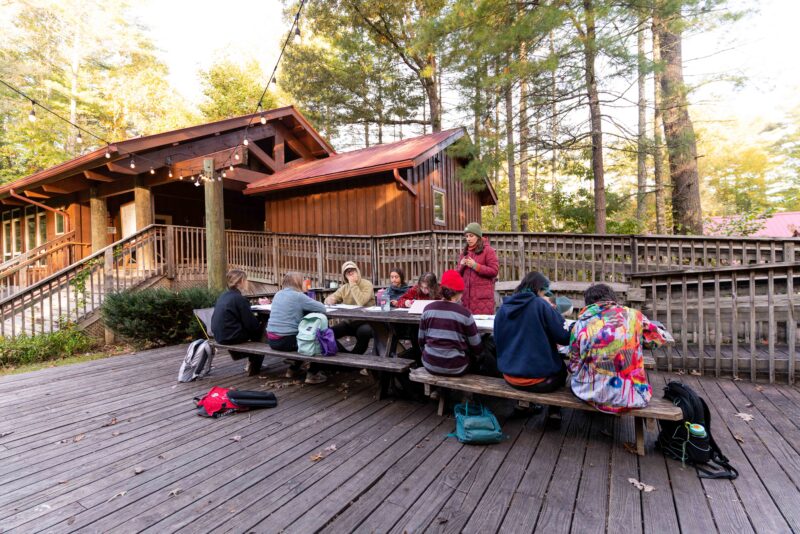
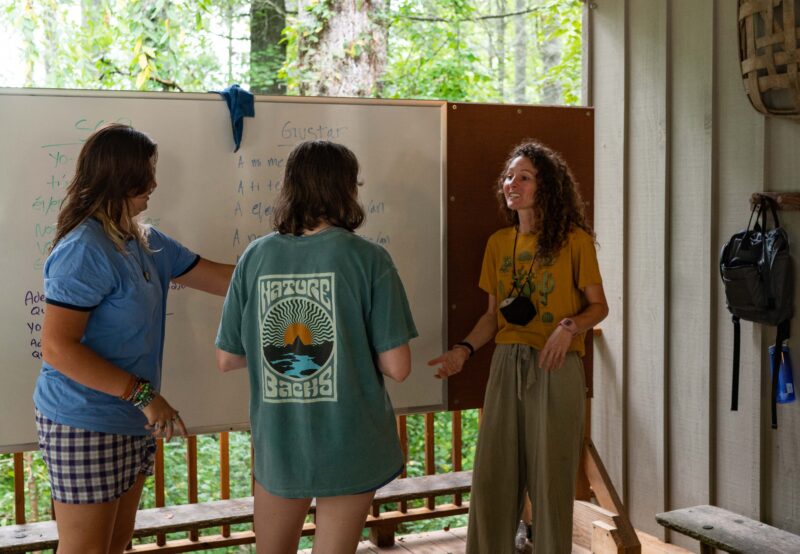
OA classes are small and discussion-focused with weekly readings and project-based assignments to deepen engagement. Unlike in larger, more traditional high school classroom structures, OA students are responsible for their own learning in a way that is both rigorous and supportive. The close connections with teachers also leave students with college recommenders who can vouch for them as learners and people.
Additionally, students become comfortable asking their faculty for feedback and support on tougher assignments. In the end, OA students leave with a newfound spark for learning and the skills to help them succeed in the various learning environments they will encounter in high school, college, and beyond.
Independent Living Skills
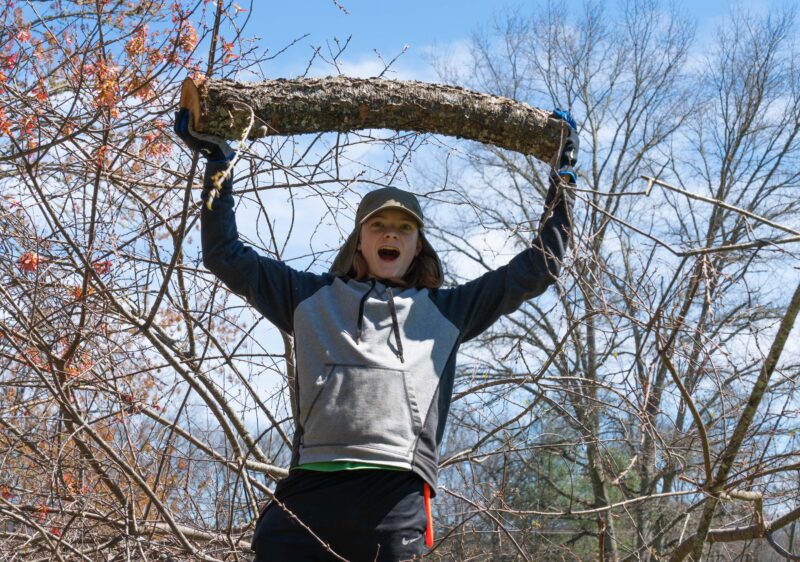
Not many college freshmen can say they’ve had experience living away from home – without their parents and in a group of new people – for four whole months. OA students gain skills in living more independently during their semester, from how to do their own laundry and dishes, to time management skills to ensure they get their homework done with time left to play board games with friends. Colleges see a semester-away experience as a sign that a student already knows how to not just survive, but how to thrive away from home.
Communication and Community
Through our Social-Emotional Learning curriculum (CIRCLES), every OA student gains a powerful toolkit of feedback and communication skills. These skills are essential in college to advocate for yourself with professors, negotiate with a new roommate, and build community! The OA community also consists of students and faculty from around the country with a wide variety of backgrounds and experiences. By experiencing this kind of intentional community, students learn to appreciate others’ differences, and leave with broader perspective.
Overcoming Challenges from the Trails to the Dorms
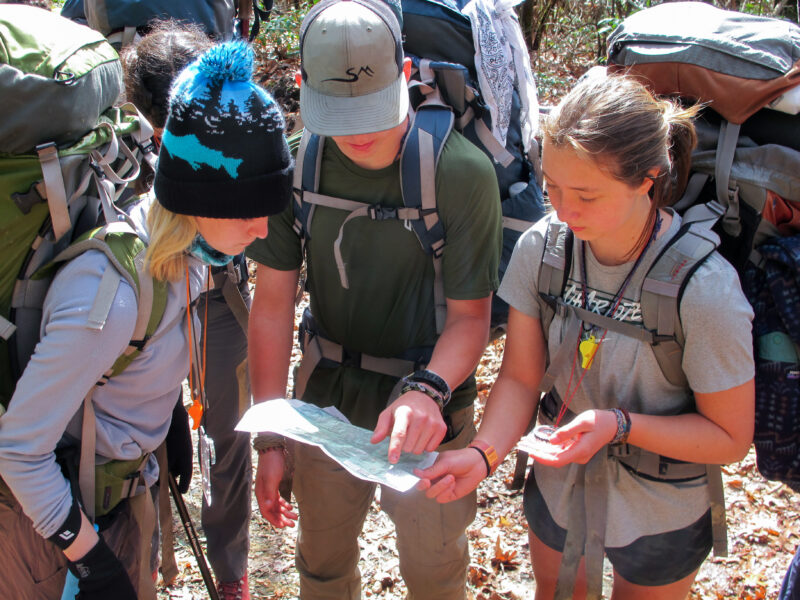
Leaving your high school routine for four months is inherently a big decision, and one that will always come with a degree of challenge. However, OA’s curriculum intentionally challenges students in productive ways to support their growth as confident and well-rounded young people. That might look like a hard trek up a mountain, a difficult moment of feedback between cabinmates, or the repetitive practice it takes to master a new song on the guitar. By overcoming challenges and celebrating every success along the way, OA students leave their semester confident in their resilience for any future challenges in college and the rest of their lives.
Top Colleges Attended by OA Alumni in the Past 10 Years
Appalachian State University
Brown University
Colorado College
Cornell University
Dartmouth College
Davidson College
DePaul University
Elon University
Harvard University
Middlebury College
Northeastern University
Oberlin College
Sewanee: University of the South
Smith College
Stanford University
Swarthmore
The Julliard School
Tufts University
Tulane University
University of California Berkeley
University of Georgia
University of North Carolina Chapel Hill
University of Colorado Boulder
University of Vermont
Vanderbilt University
Warren Wilson College
and 100+ more…
Alumni Essays
OA alumni leave with stories to tell for years to come.
Many OA alumni use their OA experiences as the foundation for college essays, assignments in high school and college, job applications, and more. Read excepts of some recent alumni essays below.
Izzy’s supplemental college essay:
BRIDGE, an Outdoor Academy course, combined English, history, and environmental science. For our final project, we did a deep dive into a topic of choice to explore and create a zine over two weeks. Instead of meeting in individual classes, our days consisted of multidisciplinary 3-4 hour morning and afternoon sessions.
As someone who loves everything about water–swimming, canoeing, living near Lake Michigan–I wanted to combine the perspective of my identity and interests with my North Carolina semester (where, shockingly, there are no naturally occurring lakes). My project explored the essential questions of how water has shaped people and places, and vice versa.
Aligned with OA’s no technology policy, instead of Googling topics, aimlessly skimming Wikipedia, or quickly typing into a document, the project necessitated slower, purposeful intention that deepened my learning experience. I carefully selected and synthesized literature of all kinds from ecology textbooks, indigenous narratives, news articles, and fictional short stories, to autobiographies. I interviewed a local trout farmer, spending an hour via landline phone discussing his experience with waterways from agricultural, economic, and ethical perspectives. To create an evocative, artistic, and informational zine also meant I had to get crafty. I sifted through dozens of magazines, cutting, placing, and gluing. Using quotes and facts from the readings, found imagery, the interview, and even song lyrics, I complemented them with my own dialogue, and reinforced them with artwork.
With limited time and using only what was readily available in the school’s library and craft room, creating the zine was a challenging deep dive, but I loved it. Detailed, unique, and homemade, I am incredibly proud of the end result and its ability to influence others, but more importantly, inspired and motivated to keep pursuing these passions and advocate for positive impact in the world.
Excerpt from Ally’s college essay:
One of my greatest life accomplishments is described numerically: 150 miles on the Appalachian Trail (AT). The personal growth I experienced backpacking on the AT shaped my identity and filled my soul.
My strong connection with the woods formed sophomore year at The Outdoor Academy (OA), a one-semester boarding school in North Carolina. I exponentially grew academically, socially, and emotionally. A core OA concept is living simply, including without technology. Adjusting was challenging, but I quickly realized this lifestyle was an incredible privilege. We sang, hand-wrote papers, used books and teachers as resources, and shared one landline phone for occasional calls home. Upon the semester’s end in December 2020, I left a place that became home in just under four months to return to what had been home for 15 years. I needed to blend my identities and retain my OA spirit.
Therefore, I re-entered the woods a mere two weeks later in sub-twenty-degree weather when two friends and I backpacked and camped in Pisgah National Forest. That summer, my best friend and I hiked five days along the AT and set a goal to complete all 78 Georgia AT miles by the year’s end. We squeezed in weekend hikes during our only free weekends, accomplishing our goal step by step. On December 27, we skipped into North Carolina laughing with pride and delight. We immediately began planning our next adventure.
Summer 2022, two friends and I hiked eleven days along the AT in the Great Smoky Mountains National Park without adults. We continued to use our acquired skills, facing multiple obstacles even before leaving: the date changed, the itinerary shifted, and the food organization took four dreadful hours. Nevertheless, we left one July dawn with forty-pound packs on our backs, maps in our hands, and our trusty hiking boots on our feet.
…
My OA experience and subsequent backpacking resulted in tremendous personal growth. The woods are therapeutic, but even more, they are one of my greatest teachers. Each person I met and each trail I walked taught me valuable lessons I will carry with me throughout my life. I learned how to approach conflict with composure and wisdom. I simultaneously learned self-sufficiency and when to consult with others. I learned my limitations and that sacrifice can be necessary. Because of the challenges
I have faced on the trail, I feel strong, independent, ready to face adversity, and grateful for the many gifts in my life. With anticipation and wonder, I look forward to my next 150 miles and beyond.
Adam, from Decatur, GA, is still in high school, drawing from his OA experience to write essays like this one. He entered the following piece into a writing contest.
“Who’s to say what’s good or what’s bad?”
Last January, I sat in the middle of the South Carolina foothills, sick to my stomach, surrounded by miles of forest and eleven strangers. At that moment all I could do was question every decision I made up to that point and repeat a mantra I heard hours earlier.
When I decided to spend the spring semester of my sophomore year at an outdoor semester school in North Carolina, I didn’t know what to expect. The first couple days on campus were ice breakers between the nineteen of us, and still I only learned some names before we were split into two groups and packed for the first trek. The first trip was a five day backpacking trip. I hadn’t even been camping before.
Right before we left, Morgan, one of the trek leaders, told us a story that he said carried him through backpacking trips. It was about a farmer who would respond to every situation with, “Who’s to say what’s good or what’s bad?” For example, her horse ran away but came back with a herd of wild horses and she said, “Who’s to say what’s good or what’s bad?” One of those wild horses broke her son’s leg, but he was exempt from fighting in a deadly battle, “Who’s to say what’s good or what’s bad?” To be completely honest, my world was not rocked by this story, not initially that is.
We left shortly after and started on the two hour drive from campus to the trailhead. We only hiked around three miles before we had to start setting up camp, as it was January and it got dark and cold fast. I started learning the ropes, how to set up a tent, how to filter water, etc. Unfortunately, I never learned how to tie up a bear hang because after dinner while everyone was pulling our cooking supplies up a tree, I was sitting on a log and rocking back and forth trying to quell my stomach after a sudden wave of nausea. It definitely was not the best feeling, and the fact that I was in the middle of the woods with random strangers I had met two days earlier certainly didn’t help. But, “Who’s to say what’s good or what’s bad?” That’s what I had to tell myself, it’s not like I had any control over the situation other than suck it up a bit and ask the trek leaders for medicine.
When I explained everything to the trek leaders they immediately responded with lots of support and compassion –plus some Tums– and told me that it’s a very common experience to have while backpacking for the first time. They also recommended that I go to bed early, meaning I would have to walk past everyone and explain why I was going to sleep at 8 pm. Normally this isn’t embarrassing, but most people don’t like sharing a tent with a sick stranger, and I didn’t want to be the culprit of anyone’s unease. Nevertheless, I waddled over to the tent and explained the situation when questioned. I’m not sure what I expected, but I definitely didn’t expect every single person to sympathize with me, tell me to feel better, and to sleep well. I had never had so many people care for me so much, especially a group of nine teenagers who I barely knew. It was definitely a rough night, but in the end I didn’t care because I knew whatever the next four months had in store would be great if these were the people I was spending it with.
The saying, “Who’s to say what’s good or what’s bad?” carried me through the rest of the semester, and still does today. Any situation can change in a second, and you never truly know what could come out of a “bad” or “good” situation. Saying this keeps me from jumping to conclusions or being overcome by emotion, especially in a situation that I have no control over. It reminds me to take a breath and not take anything too seriously, because “Who’s to say what’s good or what’s bad?”
Sonjae’s supplemental college essay:
Jesse swung a heavy garbage bag into the dumpster as I walked by—a mundane moment if not for the fact that Jesse was my school’s director. He smiled and said, “You gotta find a job and fill it!” I’d already had this mindset, but his remark made me more intentional about it.
Freshman year, I found a job to fill. A student had been shot and killed while walking home, leaving our town shaken by the immense tragedy. His family envisioned transforming an old shooting range into “Eli’s Garden of Healing.” I volunteered to serve as the fundraising event photographer, seeking to capture tender moments between people. The nonprofit later used these photos on social media to raise money.
Junior year, my music honors society partnered with Integrated Refugee and Immigrant Services. On my first day, I asked the kids their names. When they gave me confused stares, I realized they didn’t understand English. Our team decided to communicate through music. The next week, when I pulled out my guitar, the kids immediately flocked to it, peeking over one another. They eagerly strummed while I held the chords. I then taught them to play chords, all without using English. I’ll never forget their beautiful smiles when I sang “Puff the Magic Dragon.”
Gather New Haven’s Schooner Camp seems to have endless jobs to fill. For four summers, I have been pulling boats ashore, leading campers on trail cleanups, and taking website photos. One summer, another instructor and I observed our sailors getting stuck on the water. Discovering curriculum gaps, we wrote a new, comprehensive instructor’s handbook. The next summer, I felt the old marine ecology lesson plans weren’t sufficient, so I created my own to more deeply engage my campers. This past summer, I noticed the sailing staff was disorganized, causing boat damage and launch delays. Over weekends and lunch breaks, I wrote a waterfront management manual and submitted it to the director for use next year.
I would bring “find a job and fill it” to Yale. I’m especially drawn to join programs where Yale has identified and addresses a local need, such as Dwight Hall’s Urban Fellows and Public School Interns programs. With Yale Undergraduate Production, I would support student performances as a photographer. I’m sure Jesse’s principle will take on a new meaning in my college years. I intend to pass it on to others—it’s infectious.
Josie’s Common Application college essay:
As my backpacking group hoisted the heavy packs on our backs and prepared to resume hiking after our short break, we were blissfully unaware of the mistake we were making on our journey. Eager to reach our campsite and rest for the day, we had only looked briefly at our map before setting off… four miles in the wrong direction.
This backpacking trip was one of the many adventures I experienced while at the Outdoor Academy, a semester school where I was encouraged to hold leadership roles and be receptive to new experiences. During the semester, my peers and I learned various concepts and mindsets we were encouraged to implement, but one idea in particular stuck out to me. The “hard-easy,” as my instructors called it, is the concept of doing something challenging or seemingly inconvenient in the present to make the future easier or more rewarding. I soon discovered that the hard-easy could apply to any task, from finishing homework assignments to have free time later, to stocking the wood stove before bed so everyone doesn’t freeze in the night, to resolving minor personal conflicts in community meetings so that they don’t grow into major conflicts, to encountering obstacles on backcountry adventures.
Instead of using the hard-easy on our trek, my backpacking group inadvertently chose the easy-hard and immediately faced the consequences. If we had spent just one more minute studying our map and compass, we could have saved ourselves eight extra miles of hiking. Also, this error deprived us of the most basic camping conveniences and comforts. That night, we had to scout for a backcountry campsite in the woods, find an unknown water source on our own, and we could not have a fire.
From that trip forward, I endeavored to complete harder tasks to make my life easier in the future. Even now, years after my time at the Outdoor Academy, I implement the hard-easy whenever the opportunity presents itself. I immediately learned to apply the hard-easy in my academic pursuits. Throughout high school, I developed my writing skills and noticed that devoting additional time to preparing my research and creating a thorough outline simplified the writing process.
During my junior year, I served as the president of the Girl Up chapter at my school, where I led mentorship sessions with local middle school girls and organized events. It was a rewarding experience to be in charge of a larger club, but group organizing was an unfamiliar and formidable responsibility. This newfound role became an opportunity to use the hard-easy as we discovered how to structure our planned activities and duties. When I arranged for the club to meet more frequently to create a monthly schedule of events for the girls, it made life easier. Less confusion would occur in the future, and I could spread the word to everyone at once instead of having to send frantic last-minute emails the day before an event.
This past summer I worked on a conservation crew with the Conservation Corps of North Carolina in which I worked and camped at the Uwharrie National Forest. The work was difficult, but I enjoyed helping the park and working with the crew. We implemented the hard-easy approach to organize our work in several ways to conserve our energy. For instance, when we performed trail maintenance, we did the heavy digging and hauling gravel to the worksite first in the morning so that in the heat of the afternoon, we only needed to move gravel shorter distances and to spread it around.
Since I have embraced the art of the hard-easy, it has become a fundamental part of how I approach tasks and problem-solving. This valuable lesson is vital in many aspects of my daily life. While it is not always simple to utilize this principle in the present, I now understand the result in the future is always worth the effort.